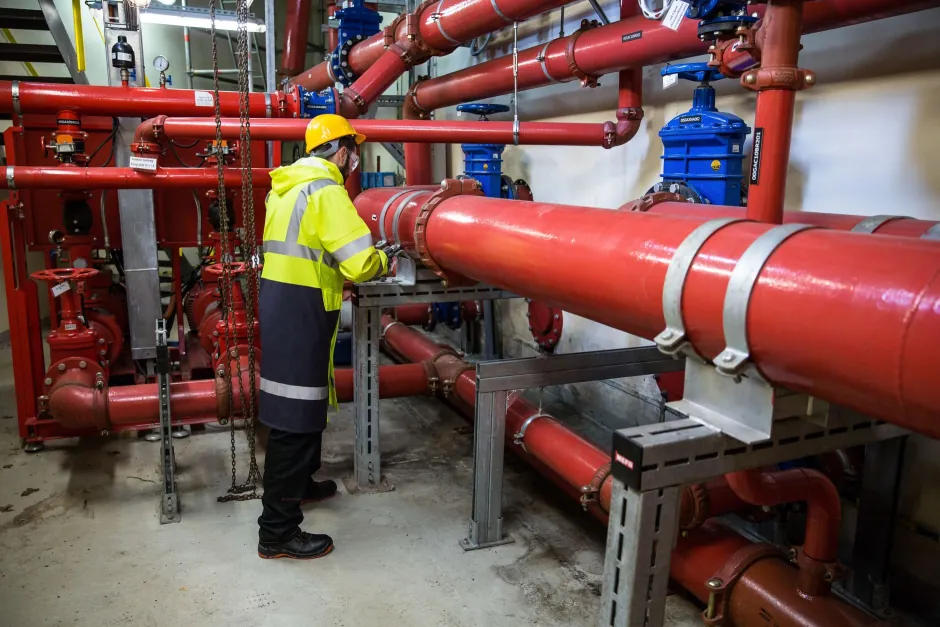
Aimed at the point where later work was cut into the original line, because on this housing that is where the trouble tends to be rather than along the run.
Online Now!·--:--
On a lot of properties the relining conversation is about a length of pipe that has had enough. Here it usually is not, because the original drainage was laid in one program and it is consistent.
What is not consistent is what was cut into it later. A rear extension, a second bathroom, a laundry moved out into a new part of the house. In each case a new waste had to join the existing line, and how well that junction was formed is entirely down to whoever did it and how much they cared.
A badly formed junction leaves an edge, a lip, or a piece of the new pipe protruding into the old one. Every one of those collects. Material stalls at that point and builds from there, and the pipe either side can be in perfect condition while the same fixture blocks every winter.
The repair follows the diagnosis. The section is lined and the junction reinstated, cut back open from inside once the liner has cured, which leaves a clean entry where an obstruction used to be. Sometimes the junction can be dealt with more directly, and where a section has genuinely collapsed it needs replacing. The footage decides which, which is why we will not quote without it.


If that fixture came with an extension, the junction is the first place to look and the camera settles it.
Laid in one program, to one set of practices, with the materials of that period.
Which is why the defect is rarely spread along the length.
An extension or a second bathroom meant a new waste joining an existing line.
How well that was formed depended entirely on whoever did it.
A lip or an intrusion at the join stalls material and builds from there.
The pipe either side can be perfect while one fixture blocks repeatedly.
The section lined, then the junction cut back open from inside once cured.
That leaves a clean entry where the obstruction was.
No liner rescues a pipe that has lost its shape or its grade.
The footage says which of the two you have.
Fixed price agreed before anything starts. These are indicative 2026 ranges.
Deducted from the job if you proceed, and the footage is yours either way.
Where one short length is genuinely the whole problem.
Cut back open from inside once the liner has cured, leaving a clean entry.
Priced on length and access rather than by the hour.
Where a collapse makes a liner the wrong answer.

Which fixture, how often, and whether it came with later work. That tells us where to point the camera.

End to end, but with particular attention to wherever something joined the original line.

The section lined, cured in place, and the junction cut back open from inside to leave a clean entry.

So you can see the junction as it is now rather than take our word for it, and you keep both recordings.
Get it filmed first. On this housing the answer is frequently a junction rather than a length, and that is a different job.
Call 1300 381 569
Because that is where the defects on this housing tend to be. The original drainage was laid in one program and it is consistent. What is not consistent is what got cut into it afterwards, when a rear extension or a second bathroom was added and a new waste had to join the existing line.
A badly formed one leaves an edge, a lip or an intrusion where the new pipe enters. Every edge collects. So the line either side can be in perfect condition and the same fixture will still block, because material stalls at that one point and builds from there.
The pattern gives it away. The same fixture, repeatedly, on a house that has been added to. If a camera then shows sound pipe with one badly formed junction in it, that is the whole explanation.
It can. The section is lined and the junction is then reinstated, which is cut back open from inside once the liner has cured. Done properly it leaves a clean entry rather than the obstruction that was there.
No. Sometimes the junction can be repaired more directly, and where a section has collapsed or dropped out of grade it needs replacing instead. The footage decides that, which is why we will not quote without it.
The material is rated at around fifty years, and the repair is continuous, so there is no joint left at the point that failed.
A patch over a single defect is $1,500 to $2,500. A full section is $4,000 to $9,000 depending on length and access. Reinstating a junction is $400 to $900. The camera inspection is $250 to $450 and comes off the job.
Tell us which fixture is the problem and whether it came with an extension or a second bathroom. That connection is the one worth making before anybody quotes.
Filmed, lined where lining is right, and the junction reinstated properly.
Online Now!·--:--